
April Fools' Day pranks fade away by the next morning, but cybercriminals don't take a break.
Spring marks a peak season for hackers. It's not due to negligence, but because hectic schedules and constant multitasking create openings for deceptive scams to slip past vigilance.
Here are three current cyber scams targeting not the unwary, but diligent employees simply trying to navigate their daily tasks.
As you review these, ask yourself: Would everyone on my team take the time to spot each threat?
Scam #1: The Fake Toll or Parking Fee Text
An employee receives a text saying:
"You have an outstanding toll of $6.99. Pay within 12 hours to avoid penalties."
The message references authentic toll systems—E-ZPass, SunPass, FasTrak—geared to their location. The small amount feels harmless, so they pay quickly between meetings.
But the payment link is fraudulent.
In 2024, the FBI logged over 60,000 complaints about fake toll texts, with a 900% surge in 2025. Over 60,000 bogus websites mimic legitimate toll authorities. These scams even target states without toll roads.
Why it works: the low amount doesn't raise suspicion, and recent toll or parking experiences add credibility.
The safeguard: Real toll agencies never demand immediate payment via text. The best defense is to never click such links. Instead, go directly to the official site or app. Avoid replying; even texting "STOP" can confirm your number is active.
Convenience is the trap, process is the shield.
Scam #2: Unexpected File Sharing Emails
These blend seamlessly into day-to-day work.
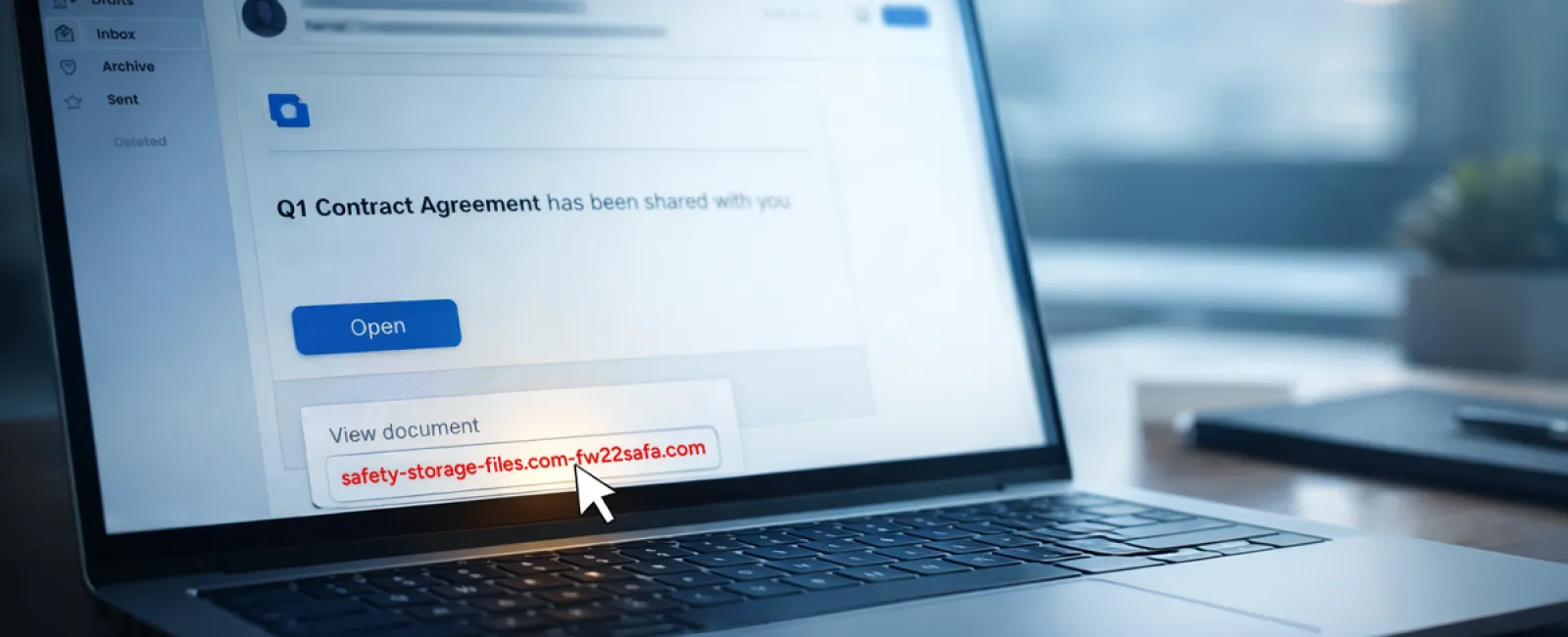
An employee gets an email saying a file was shared—maybe a contract via DocuSign, a spreadsheet on OneDrive, or a document on Google Drive.
The sender appears genuine, and the notification looks authentic.
Clicking prompts a login page. When credentials are entered, attackers gain access inside the company's cloud systems.
Phishing using trusted platforms has surged 67% in 2025, with Google Slides phishing links jumping over 200%. Employees are seven times more likely to fall for malicious links from OneDrive or SharePoint notifications due to their familiar format.
Some attacks craft files within compromised accounts and send real notifications from legitimate servers, bypassing spam filters.
The defense: Train teams to never click unexpected shared file links. Instead, they should log in directly to the platform to verify. IT can mitigate risk by restricting external sharing and setting alerts for suspicious logins—actions achievable in minutes.
Routine caution protects your cloud.
Scam #3: Highly Convincing Phishing Emails
Gone are the days of poorly written scam emails.
A 2025 study revealed AI-generated phishing emails have a 54% click rate—over four times higher than human-crafted attempts. These emails are polished, referencing real companies, job titles, and workflows gathered from platforms like LinkedIn.
Targeting is precise: HR teams receive fake employee verification requests; finance participants get fraudulent vendor payment updates. One test showed 72% of recipients engaged with vendor impersonation emails—90% more than other phishing types.
Key protection: Verify any request involving credentials, payment changes, or confidential data via a second channel—phone call, chat, or in-person confirmation. Hover over sender email addresses to scrutinize domains. Treat urgency in messages as a red flag.
True security doesn't rely on panic or pressure tactics.
The Core Issue
These scams thrive on familiarity, authority, timing, and the rush to act quickly.
The real vulnerability isn't employees but systems assuming everyone will always slow down to double-check under pressure.
When a single hurried click could compromise your operation, it signals not a human error but gaps in process.
Thankfully, these process gaps are fixable.
How We Can Support You
Most business owners don't want the headache of managing security training or being the gatekeeper for safe clicking habits.
They want assurance their business is shielded from unnoticed threats.
If you're worried about your team's protection—or know others who should be—let's talk.
Book a straightforward discovery call to discuss:
- The latest cyber risks impacting businesses like yours
- Common ways threats infiltrate routine workflows
- Practical strategies to reduce risk without hindering productivity
No pressure, no scare tactics—just honest conversation about how to identify and eliminate vulnerabilities.
Click here or give us a call at (949) 537-2909 to schedule your free 10-Minute Discovery Call.
If this message isn't for you, please share it with someone who would benefit. Sometimes, knowing what to watch for turns a "would have clicked" into a "Nice try!"


